House (1986): William Katt, Vietnam Nightmares, and the Haunted House That Bit Back
- Johnny Rewind

- Apr 3
- 3 min read
By Vicky FastForward | The Scream Queen of Style
House is a 1986 haunted house film that refuses to be only a haunted house film. Its protagonist, Roger Cobb, is a horror novelist and Vietnam veteran whose aunt has died in her own house under mysterious circumstances and whose young son vanished from the same property. He moves in, intending to write his Vietnam memoir, and discovers that the house is either haunted or serving as a portal through which the psychological damage of war manifests in physical form. Steve Miner's direction navigates the tonal requirements of a film that is sometimes genuinely scary, sometimes darkly comic, and always grounded in the specific 1980s male anxiety about Vietnam that ran through a significant portion of the decade's genre cinema.
William Katt as Roger Cobb is one of 1980s horror's most underappreciated lead performances. Katt — previously known as Ralph Hinkley from The Greatest American Hero — brings a genuine weariness to the role, a sense of a man who has already been through things that stretched the limits of credibility and is now being asked to absorb even more impossibility. The film's monster designs are outstanding practical effects work: a vast, flabby, wall-emerging creature that attacks Cobb in his bathroom; the ghost of his Vietnam buddy Big Ben, whose rotting face conceals a particular kind of revenge; the witch-like thing that lives in the closet and takes the form of his ex-wife. Each creature is distinctive and genuinely strange rather than generically monstrous.
The franchise's sequel trajectory is where things get genuinely interesting in the most chaotic possible way. House II: The Second Story (1987) abandoned virtually everything about the original — the Vietnam themes, the psychological underpinning, the specific house — in favor of a time-travel adventure involving a cowboy zombie great-great-grandfather, a pterodactyl, a baby dinosaur, and an Aztec skull that grants immortality. It is a completely different film with "House" in the title, and it is frequently described as a fantasy-comedy that accidentally ended up in a horror franchise. House III (released in some markets as The Horror Show) and House IV: The Repossession followed, each bearing only the name in common with its predecessors.
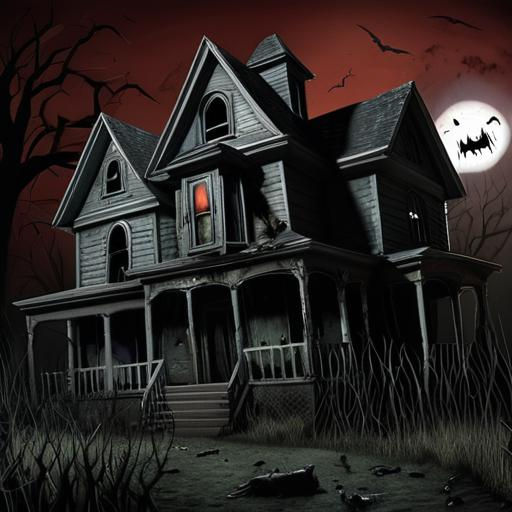
The original House's production history is a document of 1980s Hollywood horror infrastructure at its most functional. Producer Sean S. Cunningham — who made his name with Friday the 13th — brought in writer Fred Dekker (who would go on to make Night of the Creeps and The Monster Squad) and director Miner (Friday the 13th Parts 2 and 3) for a project that assembled genre veterans and delivered something slightly more personal and ambitious than its premise suggests. The Vietnam element is not a gimmick — the film takes it seriously, using the haunted house as a metaphor for the houses in memory that combatants cannot leave regardless of geography.
House is one of those films that exists in a slightly different register from the slasher franchises surrounding it in the mid-eighties. It is funnier, stranger, more emotionally grounded, and more interested in what its monsters actually mean than the genre conventions required. Roger Cobb's suburban house is a richer setting for horror than most haunted houses in eighties cinema precisely because it doubles as a psychological space rather than a purely external threat. The sequels lost this quality entirely, which perhaps explains why the original has aged considerably better than the franchise it spawned.


Comments